


The Morgenthau Plan Soviet influence on American postwar policy 1st edition by John Dietrich ISBN 1892941902 978-1892941909


Original price was: $50.00.$25.00Current price is: $25.00.
The Morgenthau Plan Soviet influence on American postwar policy 1st edition by John Dietrich – Ebook PDF Instant Download/Delivery: 1892941902 , 978-1892941909
Full download The Morgenthau Plan Soviet influence on American postwar policy 1st edition after payment
Product details:
ISBN 10: 1892941902
ISBN 13: 978-1892941909
Author: John Dietrich
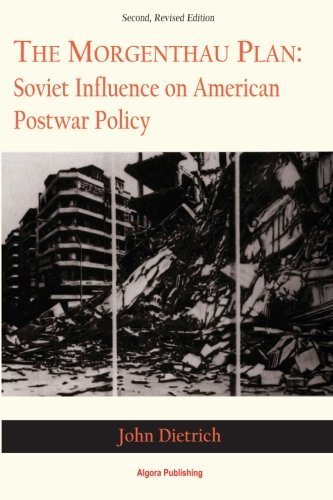
The Morgenthau Plan remains one of the most controversial postwar policies of the 20th century, sparking intense debate about its impact on post-World War II Germany. The Allies’ initial policy, introduced in the aftermath of the war, left Germany in devastation, severely damaging its economy and laying the groundwork for what some critics argue was intentional destruction. But was this “economic idiocy,” or was it an intentional attempt to neutralize a once-powerful nation, as many historians suggest? John Dietrich’s The Morgenthau Plan: Soviet Influence on American Postwar Policy offers a detailed and eye-opening account of how this controversial plan was drafted and implemented. The book explores the long-lasting effects of the plan, which sought to dismantle Germany’s industrial capabilities, leaving its population vulnerable to starvation and economic ruin. This policy was not simply an oversight or mistake, Dietrich argues—it was part of a broader postwar strategy, heavily influenced by Soviet aims, to weaken Germany as a geopolitical force. Soviet Influence and Economic Destruction: Dietrich delves into the Soviet influence that shaped American postwar policy, showing how the Morgenthau Plan played into the hands of the Soviet Union. The plan’s devastating impact on Germany mirrored the ideological goals of a postwar Soviet Union seeking to keep Europe destabilized. Dietrich documents countless official quotes and directives, highlighting how millions of Germans faced starvation and possible extermination as part of this calculated strategy. The Morgenthau Plan intended to reduce Germany’s industrial output, transforming the country into an agrarian economy and leading to widespread displacement, poverty, and hardship. Dietrich connects these outcomes to broader themes of American foreign policy at the time, influenced by Soviet interests and a desire to ensure that Germany would never rise again as a military or industrial power. The Shift to the Marshall Plan: What changed by 1947? Why did the U.S. suddenly reverse course and abandon the Morgenthau Plan in favor of the Marshall Plan, which sought to rebuild Germany and stabilize Europe? Dietrich provides insightful commentary on how and why the Allies, led by the United States, came to realize that continuing with the Morgenthau Plan would lead to greater instability across Europe. He examines how American political and economic priorities shifted and why the Marshall Plan became the preferred solution. Hidden from History: One of the most disturbing revelations of The Morgenthau Plan is the extent to which this episode in American postwar policy has been minimized or outright ignored by many historians. Dietrich’s meticulous research sheds light on the deliberate suppression of key documents and decisions that should have been more widely known. Many academic institutions and professional historians, Dietrich argues, have failed to critically address the destructive consequences of the Morgenthau Plan, leaving it a hidden chapter in postwar history. Conclusion: Dietrich’s work exposes the ethical dilemmas and geopolitical considerations that shaped the postwar era, urging readers to confront uncomfortable truths about American policy and its consequences. Through a well-documented analysis, The Morgenthau Plan: Soviet Influence on American Postwar Policy challenges conventional narratives and compels readers to reconsider the legacy of Allied actions in postwar Germany. This essential volume is a must-read for anyone interested in WWII history, postwar reconstruction, U.S.-Soviet relations, and economic policies that shaped modern Europe.
The Morgenthau Plan Soviet influence on American postwar policy 1st Table of contents:
Chapter1 : Introduction
Chapter 2: Content
Chapter 3: Conclusion
Chapter 4: Appendices
Chapter 5: Glossary
Chapter 6: References
Chapter 7: Index
People also search for The Morgenthau Plan Soviet influence on American postwar policy 1st:
morgenthau plan stalin
morgenthau plan russia
the morgenthau plan pdf
why was the morgenthau plan rejected
why was the morgenthau plan not adopted
You may also like…

Uncategorized

Uncategorized
Japanese Influence on American Children’s Television: Transforming Saturday Morning Gina O’Melia

Business & Economics - Sales & Marketing

Politics & Philosophy - Government & Politics
Ancient Greece and American Conservatism: Classical Influence on the Modern Right John A. Bloxham

Politics & Philosophy
Plan Prediction Which Policy is Preferred by Which People Wyatt

History - American Studies

Politics & Philosophy

History - European History

Poetry - American Poetry