
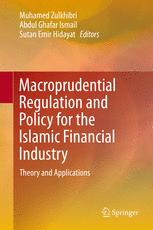
Macroprudential Regulation and Policy for the Islamic Financial Industry Theory and Applications 1st Edition by Muhamed Zulkhibri, Abdul Ghafar Ismail, Sutan Emir Hidayat 3319304458 9783319304458


Original price was: $50.00.$25.00Current price is: $25.00.
Macroprudential Regulation and Policy for the Islamic Financial Industry Theory and Applications 1st Edition by Muhamed Zulkhibri, Abdul Ghafar Ismail, Sutan Emir Hidayat – Ebook PDF Instant Download/Delivery: 3319304458, 9783319304458
Full download Macroprudential Regulation and Policy for the Islamic Financial Industry Theory and Applications 1st Edition after payment
Product details:
ISBN 10: 3319304458
ISBN 13: 9783319304458
Author: Muhamed Zulkhibri, Abdul Ghafar Ismail, Sutan Emir Hidayat
This volume aims to discuss the current research, theory, methodology and applications of macropreudential regulation and policy for the Islamic financial industry. Published in cooperation with the Islamic Research and Training Institute (IRTI), this book features contributions from a workshop presented in collaboration with the University College of Bahrain (UCB) in Manama, Bahrain, aimed to bring together experts in Islamic banking and regulation and financial economics. This resulting book sheds light on how macroprudential policy may be implemented in the Islamic financial system, and indicates current challenges and their effects on economic growth, financial stability and monetary regulation. Macroprudential policy is increasingly seen as a way of dealing with the different dimensions of systemic risk. But many central banks, bank supervisors and regulators have limited experience with macroprudential tools, particularly in the Islamic financial industry.
Macroprudential Regulation and Policy for the Islamic Financial Industry Theory and Applications 1st table of contents:
Part I: Institutional Framework for Macroprudential in Islamic Banking System
Chapter 1: Macroprudential Policy and Regulation in a Dual Banking System: An Exploratory Perspe
1.1 Introduction
1.2 Literature Review on Macroprudential Policy and Regulation
1.3 Macroprudential Policy and Regulation Framework
1.3.1 Institutional Frameworks
1.3.2 Macroprudential Powers and Instruments
1.3.3 Capital-Based Instruments
1.3.4 Credit-Based Instruments
1.4 Macroprudential Policy in a Dual Banking System
1.4.1 Malaysia
1.4.2 Indonesia
1.4.3 Gulf Cooperation Council (GCC) Countries
1.5 Conclusion
Appendix 1
References
Chapter 2: Doctrinal Challenge for Islamic Banking on Macroprudential Regulations: A Religion-R
2.1 Introduction
2.2 Desirable Direction of Development of Islamic Finance
2.2.1 Historical Development of Islamic Financial Products
2.2.2 Critiques by Academicians
2.3 Global Trends of Macroprudential Regulation
2.3.1 Overview of Macroprudential Regulation
2.3.2 Recent Trend and Implication to Islamic Finance
2.4 Religion-Regulation Mismatch
2.4.1 “Religion-Regulation Mismatch”: A Doctrinal Challenge
2.4.2 Growth of Equity-Based Islamic Financial Transactions
2.4.3 Some Combinations of Two Dimensions
2.5 Conclusion
References
Chapter 3: Conceptual Proposal for Future Macroprudential Framework Under a Dual Financial System
3.1 Introduction
3.2 Literature Review
3.2.1 Overview of Macroprudential Policy
3.2.2 Sources and Consequences of Systemic Risk
3.3 Conceptual Proposal of Macroprudential Framework
3.3.1 Macroprudential Framework in Indonesia
3.3.2 Analyzing the Risk Exposed by Contemporary Islamic Banking
3.4 Proposed Macroprudential Policy Under a Dual Financial System
3.4.1 Objective of Central Bank
3.4.2 Role of Central Bank
3.4.3 Macroprudential Policy Objective and Scope
3.4.4 Instrument of Macroprudential Policy
3.4.5 Authority of Macroprudential Policy
3.5 Conclusion
References
Part II: Macroprudential Policy, Systemic Risks and Financial Stability in Islamic Financial Indust
Chapter 4: Risk Management Methodologies: An Empirical Macro-prudential Approach for a Resilient
4.1 Introduction
4.2 Research Design and Methodology
4.3 Case Analysis
4.3.1 Alpha Analysis: Natures of Risks in Islamic Banking
4.3.1.1 Liquidity Risk Drivers
4.3.1.2 Wholesale Funding Risk
4.3.1.3 Retail Funding Risk
4.3.1.4 Intraday Funding Risk
4.3.1.5 Intra-group Funding Risk
4.3.1.6 Off-Balance Sheet Risk
4.3.1.7 Marketable Assets Risk
4.3.1.8 Non-marketable Asset Risk
4.3.1.9 Franchise Viability Risk
4.3.1.10 Funding Concentration Risk
4.3.1.11 Cross Currency Risk
4.3.2 Stress Testing
4.3.2.1 Stress Testing Approach
4.3.2.2 Recovery and Resolution Plan
4.3.2.3 Stress Test Scenarios
4.3.2.4 Impact on the Bank from a Stress Event Which Impacts the GCC Region
4.3.3 Conduct Risk
4.3.3.1 Inherent Factors
4.3.3.2 Structures and Behaviours
4.3.3.3 Environmental Factors
4.3.4 Beta Analysis
4.4 Risk Reporting
4.5 Conclusion
References
Chapter 5: Competitive Condition and Market Power of Islamic and Commercial Conventional Banks in
5.1 Introduction
5.2 Literature Review
5.3 Methodology
5.3.1 Indicators of Concentration
5.3.1.1 The k-Bank Concentration Ratio
5.3.1.2 The Herfindahl-Hirschman Index
5.3.2 Panzar and Rosse Model
5.3.3 The Lerner Index and the Power of Pricing
5.3.4 The Factors Expressing the Degree of Competitiveness
5.3.5 The Data
5.4 Empirical Findings
5.4.1 Traditional Indicators of Concentration and Competition
5.4.2 New Indicators of Competition and Market Power
5.4.3 Robustness Test
5.4.4 The Lerner Index
5.4.5 The Factors Which Affect the Degree of Competitiveness
5.5 Conclusion
References
Chapter 6: Early Warning Indicators and Macroprudential Policy Tools
6.1 Introduction
6.2 Early Warning Indicators for Financial Vulnerabilities
6.2.1 Principles of Selection
6.2.2 Core and Non-core Liabilities
6.3 Capital Flow Management
6.3.1 How Capital Flows Affect Income Inequality
6.4 Macroprudential Tools
6.4.1 Capital Requirements Adjustment over Economic Cycles
6.4.2 Loan-to-Deposit Caps
6.4.3 Non-core Liabilities Levies and Taxes
6.4.4 Time-Varying Loan-to-Value Ratios and Debt Service-to-Income Ratios
6.4.5 Regional Safety Nets
6.4.6 Working with Other Stabilization Policies
6.5 Core Monetary Reform and Financial Integration
6.5.1 Proposed Monetary Reform and Its Possible Implementation
6.5.2 Key Principles and Distinct Features of the Islamic Finance Model
6.5.2.1 Increased Emphasis on Asset-Based Financing
6.5.2.2 Ethical Supervisory Boards
6.5.2.3 Legal and Enforcement Framework
6.5.2.4 Separation of Risk-Free and Risk-Bearing Accounts
6.6 Globalization and Financial Integration
6.6.1 How Islamic Finance Instruments Can Help
6.6.2 The Missing Link
6.7 Conclusion
References
Chapter 7: A Proposed Formula for Reserve Requirement–Financing to Deposit Ratio: The Case of
7.1 Introduction
7.2 Literature Review
7.3 Analyses and Findings
7.3.1 Scope of the Analysis
7.3.2 Optimal FDR Formula for Islamic Banks
7.3.3 Determining the Upper Level of FDR for Islamic Banks
7.4 Conclusion
References
Chapter 8: Testing of the Procyclicality of Islamic and Conventional Banks in Indonesia
8.1 Introduction
8.2 Literature Review
8.2.1 Overview of Procyclicality
8.2.2 Previous Studies
8.3 Data and Methodology
8.3.1 Data
8.3.2 Model to Test the Procyclicality of Bank Financing Growth
8.3.3 Methodology
8.4 Empirical Results
8.4.1 ECM Tests
8.4.1.1 Unit Root Tests
8.4.1.2 Cointegration Test
8.4.1.3 Error Correction Term
8.4.1.4 Diagnostic Tests
8.4.2 ARDL Tests
8.4.2.1 Cointegration Test (Bound Test)
8.4.2.2 Model Selection and Tests
8.4.3 Results of Granger Causality
8.4.4 Results of Procyclicality
8.4.5 Empirical Analysis
8.4.5.1 Procyclicality of Islamic and Conventional Banks
8.4.5.2 Inherent Stability of Islamic Finance and Banking
8.5 Conclusion
References
Chapter 9: Short-Term Liquidity Management Mechanisms in the Absence of Islamic Interbank Loan Ma
9.1 Introduction
9.2 Literature Review
9.3 Practical Review
9.3.1 Criticism of the “Central Bank-to-Islamic Bank” Relationship Models
9.4 Proposal for Establishing a Central Bank-to-Islamic Bank Relationship
9.5 Conclusion
References
Part III: Experiences in Implementing Macroprudential Policy in a Dual Banking System
Chapter 10: Macroprudential Analysis of Financial Crisis Impacts on Banks’ Soundness: Evidence f
10.1 Introduction
10.2 Pakistan Financial Sector
10.3 Global Financial Crises
10.4 Research Methodology
10.4.1 Stress Testing
10.4.2 Calculations
10.4.3 Individual Score
10.4.4 Total Score
10.5 Empirical Analysis
10.5.1 Stress Testing During Crisis Period (2007–2009)
10.5.2 Stress Test Result During the Postcrisis Period 2009–2012
10.6 Conclusion
Appendix 1: Bankwise CLSA Test Scores
Appendix 2: CLSA Scoring Actual Criteria
Appendix 3: CLSA Scoring Adjusted Criteria
References
Chapter 11: Regulatory Framework for Islamic Finance: Malaysia’s Initiative
11.1 Introduction
11.2 Methodology
11.3 Assessment of Regulation and Policies
11.3.1 Financial Industry Level
11.3.2 Islamic Banking Sectoral Level
11.3.3 Regulatory Policies Level
11.3.3.1 Islamic Banking Act 1983
11.3.3.2 Banking and Financial Institutions Act 1989
11.3.3.3 Central Bank of Malaysia Act 2009
11.3.3.4 Islamic Financial Services Act 2013
11.4 Conclusion
References
Chapter 12: Islamic Finance and Macroprudential Policy: The Case of Iranian Banking System
12.1 Introduction
12.2 Literature Review
12.2.1 Macroprudential Policies
12.2.2 Macroprudential Instruments
12.2.3 Indicators for Implementation of Macroprudential Instruments
12.2.4 Some Issues in the Application of Macroprudential Polices
12.3 Islamic Financial System
12.4 Islamic Finance in Iran
12.5 Macroprudential Instruments in Islamic Finance
12.6 Conclusion
References
Part IV: Interplay Between Macroprudential Policy with Other Markets
Chapter 13: Indonesia Shari’ah Compliance Stock Index Responses Toward Macroprudential and Moneta
13.1 Introduction
13.2 Literature Review
13.3 Data and Methodology
13.3.1 Data
13.3.2 Volatility Modeling
13.3.3 Wild-Bootstrapped Automatic Variance Ratio Test
13.4 Empirical Results
13.5 Conclusion
References
Chapter 14: Socioeconomic Development and Its Effect on Performance of Islamic Banks: Dynamic Pan
14.1 Introduction
14.2 Literature Review
14.3 Data and Methodology
14.3.1 Data Collection
14.3.2 Methodology
14.3.3 Static Models (Fixed and Random Effects)
14.3.4 Dynamic GMM Models
14.3.5 Quantile Regression (QR) Model
14.4 Results and Discussion
14.4.1 Descriptive Study
14.4.2 Correlation Matrix
14.4.3 Empirical Findings
14.4.4 Quantile Regression
14.5 Conclusion
References
Chapter 15: Macroprudential Tools and Its Relationship with Monetary Policy Tools
15.1 Introduction
15.2 Macroprudential Tools
15.3 An Insight into the Working of Monetary Policy
15.3.1 Monetary Policy Tools
15.3.1.1 Open Market Operation
15.3.1.2 Reserve Requirements
15.3.1.3 Interest Rate
15.3.2 Doctrines in Operational Target of Monetary Policy
15.3.2.1 Reserve Position Doctrine
15.3.2.2 Short Interest Rate Doctrine
15.3.3 Other Literatures on Choices of Operational Targets
15.4 A Visit on the Working of Monetary Policy in Selected Countries
15.4.1 Developed Countries
15.4.1.1 United States
15.4.1.2 United Kingdom
15.4.1.3 Germany
15.4.1.4 Japan
15.4.2 Developing Countries with Full-Pledged Islamic Banking and Dual Banking System
15.4.2.1 Pakistan
15.4.2.2 Iran
15.4.2.3 Sudan
15.4.2.4 Malaysia
15.5 Discussion
15.6 Conclusion
People also search for Macroprudential Regulation and Policy for the Islamic Financial Industry Theory and Applications 1st:
macroprudential rules
macroprudential policies
macroprudential measures
macroprudential definition
macroprudential
Tags: Macroprudential, Regulation, Policy, Financial Industry, Applications, Muhamed Zulkhibri, Abdul Ghafar Ismail, Sutan Emir Hidayat
You may also like…

Politics & Philosophy - Government & Politics

Business & Economics - Professional Finance

Business & Economics

Computers - Computer Science

Business & Economics - Mathematical Economics

Business & Economics
Business & Economics
Business & Economics - Accounting