

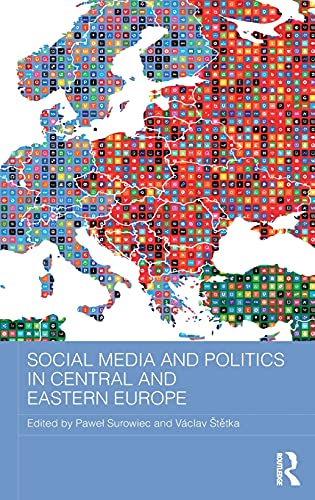
Social Media and Politics in Central and Eastern Europe 1st edition by Pawel Surowiec ISBN 0367875012 978-0367875015

Original price was: $50.00.$25.00Current price is: $25.00.
Social Media and Politics in Central and Eastern Europe 1st edition by Pawel Surowiec – Ebook PDF Instant Download/Delivery: 0367875012, 978-0367875015
Full download Social Media and Politics in Central and Eastern Europe 1st edition after payment
Product details:
ISBN 10: 0367875012
ISBN 13: 978-0367875015
Author: Pawel Surowiec
Social media are increasingly revolutionising the ways in which political communication works, and their importance for engaging citizens in politics and public affairs is well understood by political actors. This book surveys current developments in social media and politics in a range of Central and Eastern European countries, including Ukraine and Russia. It explores the process of adoption of social media by politicians, journalists and civic activists, examines the impact of the different social and cultural backgrounds of the countries studied, and discusses specific political situations, such as the 2012 protests in Moscow and the 2014 EuroMaidan events in Ukraine, where social media played an important role. The book concludes by addressing how the relationship between social media and politics is likely to develop and how it might affect the still relatively new democracies in the region.
Social Media and Politics in Central and Eastern Europe 1st Table of contents:
PART I: Political parties, actors and social media
1. Who is afraid of the platforms? Adoption of and strategies for use of social media by politicians in the Czech Republic
Politicians on social networking sites: key discourses and areas of enquiry
Social media in Czech society and Czech politics
Candidates on social media during the 2013 elections
Methodology
Selected results
Conclusions
Notes
References
2. The 2014 presidential elections campaign in Romania: connecting with civic-ness on Facebook
Introduction
Social media and key features of political campaigning
Web 2.0 and Romanian politics
The 2014 elections: the ‘Facebook presidency’
Discussion
Conclusions
Note
References
3. Towards self-mediatization of politics: parliamentarians’ use of Facebook and Twitter in Croatia and Hungary
Introduction
From mediatization to self-mediatization of politics
The internet and the social networking sites in the politics of Croatia and Hungary
Research methodology
Sample and data
Results
Discussion and conclusions
Acknowledgement
Notes
References
4. Personalization of political communication in social media: the 2014 Slovenian national election campaign
Introduction
Professionalization of political communication and personalization of politics
Towards the increased role of social media in Slovenian election campaigning
Methodologies
Use of Twitter in 2014 campaign for the Slovenian Parliament
Discussion
Conclusions
Notes
References
5. Professionalization and intentional disengagement: Facebook campaigning in the Bulgarian local elections in 2015
Internet and politics in Bulgarian context
Research methodology
Methods
Results
Summary of the results
Conclusions
Appendix
Notes
References
Official party Facebook pages
PART II: Social movements, interest and professional groups and social media
6. We have been to Bolotnaya: Russian protests, the online public sphere and the discourse of division
Introduction
Theorizing civil society and the public sphere in Russia
Online social media and participatory democracy
Internet, Facebook and the Russian protest
Data and method
Rhetoric of division: ‘us’ versus ‘them’
Use of pronouns: ‘us’ versus ‘everyone’
Figures of speech: constructing ‘the other’
Discussion
Notes
References
7. The networked public sphere and Ukrainian journalists
Background and aim of the chapter
Social media and political communication in Ukraine
Literature review
Methodology
Findings and discussion
Conclusion
Note
References
8. Branding Poland online: propagating and resisting nation branding on Facebook
Introduction
Soft power, social media and nation branding
Nation branding online: towards digital democratization or illusions of democratic participation?
Methodology
Findings
Analysis
Summary
Conclusions
Acknowledgments
Notes
References
9. The dilemmas of social media-enabled civic activism: the case of sexual minorities in Lithuania
Introduction
The country context
Methodology
Overview of patterns of social media use
Dilemmas of online public engagement of sexual minorities in Lithuania
Civic activism, sexual minorities and cyber-optimism
Conclusions
People also search for Social Media and Politics in Central and Eastern Europe 1st :
social media and politics in central and eastern europe
social media and politics
social media and politics articles
social media and political power
social media and politics pros and cons
Tags: Pawel Surowiec, Social Media, Eastern Europe
You may also like…
Politics & Philosophy - Social Sciences

Politics & Philosophy - Government & Politics
The Routledge Companion to Social Media and Politics 1st Edition Axel Bruns
Politics & Philosophy - Anthropology
Central and East European politics : from communism to democracy Fourth Edition. Edition Curry
History - World History
Politics & Philosophy
Politics & Philosophy - Government & Politics
Illiberal Trends and Anti-EU Politics in East Central Europe Astrid Lorenz
Politics & Philosophy - Social Sciences
LGBTQ+ Activism in Central and Eastern Europe Radzhana Buyantueva
Linguistics - Sociolinguistics