

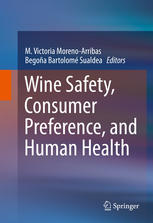
Wine Safety Consumer Preference and Human Health 1st Edition by Victoria Moreno Arribas, Begoña Bartolomé Suáldea ISBN 3319796380 978-3319796383

Original price was: $50.00.$25.00Current price is: $25.00.
Wine Safety Consumer Preference and Human Health 1st Edition by Victoria Moreno Arribas, Begoña Bartolomé Suáldea – Ebook PDF Instant Download/Delivery: 3319796380, 978-3319796383
Full download Wine Safety Consumer Preference and Human Health 1st edition after payment
Product details:
ISBN 10: 3319796380
ISBN 13: 978-3319796383
Author: Victoria Moreno Arribas, Begoña Bartolomé Suáldea
The book describes emergent investigations related to wine safety and quality, showing the relationship between these concerns and consumer preferences, with a special emphasis on the beneficial effects of wine on human health. The first part of the book describes the most relevant aspects of wine safety, emphasizing the advances offered by new technologies and biotechnological progress, as well as the impact of global climate change. The second part deals with consumer preferences, a topic little discussed in previous texts, but that has gained traction not only from the scientific point of view, but also at the industrial and social level. Finally, the last section provides an opportunity for deeper recapitulation of the beneficial effects of wine and its components on human health, including novel experimental approaches and data interpretation. From the point of view of chemical and sensory complexity,as well as human health, wine is a model product that has been the focus of extensive research, with findings over the last several years being of increasing interest to winemakers, researchers and consumers.
Wine Safety Consumer Preference and Human Health 1stTable of contents:
Part I: Wine Safety
Chapter 1: Undesirable Compounds and Spoilage Microorganisms in Wine
1.1 Introduction
1.2 Ethyl Carbamate in Wine
1.2.1 General Considerations
1.2.2 The EC Precursors
1.2.2.1 Formation of Urea by Yeast
1.2.2.2 Formation of Citrulline by Lactic Acid Bacteria
1.2.3 EC Accumulation Factors
1.2.3.1 Precursor Formation Parameters
1.2.3.2 Influence of Environmental Factors on the Production of EC from Its Precursors
1.2.4 How to Limit the Production of Precursors and EC
1.2.4.1 Urease Treatment
1.2.4.2 Arginase Suppression
1.2.4.3 Enhancing Urea Hydrolysis by Yeast Urea Amidolyase
1.2.4.4 Improvement of Urea Reabsorption
1.2.4.5 Selection of Starters
1.3 Biogenic Amines
1.3.1 General Considerations
1.3.1.1 Impact on Health
1.3.1.2 Origins of BA in Wine
1.3.2 BA-Producing Pathways
1.3.2.1 Overview
1.3.2.2 Histamine Production
1.3.2.3 Tyramine Production
1.3.2.4 Putrescine Production
1.3.2.5 Common Considerations on BA Pathways
1.3.3 Essential Factors for BA Production
1.3.3.1 Occurrence of BA-Producing Strains in Wine
1.3.3.2 Influence of Vintage, Vineyard Management, and Winemaking
1.3.4 How to Avoid or Minimize BA Production
1.4 Conclusions
References
Chapter 2: Utilisation of Natural and By-Products to Improve Wine Safety
2.1 Introduction
2.2 Sulphur Dioxide and Its Role in Winemaking.
2.3 Phenolic Compounds
2.3.1 General Properties of Phenolic Compounds
2.3.2 Antimicrobial Properties of Phenolic Compounds
2.3.3 Mechanisms of Microbial Inactivation by Phenolic Compounds
2.3.4 Influence of Phenolic Compounds on Growth and Viability of Wine Lactic Acid Bacteria
2.3.5 Influence of Phenolic Compounds on Wine Lactic Acid Bacteria Metabolism
2.4 Yeast Cells and Their Degradation Products
2.5 Lysozyme
2.6 Bacteriocins
2.7 Natural Plant-Derived Products
2.8 Other Natural Substances (Chitosan, Peptides)
2.9 Conclusions
References
Chapter 3: Applications of Nanotechnology in Wine Production and Quality and Safety Control
3.1 Introduction
3.2 Nanomaterials for Wine Production and Quality and Safety Control
3.2.1 Nanomaterials for the Degradation or Removal of Pollutants in Winemaking
3.2.2 Nanomaterials for the Immobilization or Vectorization of Wine Yeast
3.2.3 Silver-Based Nanomaterials
3.2.4 Nanofibers
3.3 Nanomaterials for Sensing and Detection
3.3.1 Nanobiosensors
3.3.2 Nanosensors
3.3.3 Separation Techniques
3.4 Conclusions
References
Chapter 4: Genetic Improvement and Genetically Modified Microorganisms
4.1 Introduction
4.2 Genetic Engineering of Wine Yeasts
4.2.1 Glycolytic and Plant-Cell Wall-Degrading Enzymes
4.2.2 Wine Secondary Aroma
4.2.3 Alcohol Level Reduction
4.2.4 Malolactic Wine Yeast
4.2.5 Urea and Ethyl Carbamate Reduction
4.2.6 Flocculation
4.2.7 Resveratrol
4.2.8 Autolysis
4.2.9 Mannoprotein Release
4.3 Random Mutagenesis of Wine Yeast
4.4 Genetic Hybridization of Wine Yeasts
4.5 Experimental Evolution of Wine Yeasts
4.6 Genetic Engineering of Wine Lactic Acid Bacteria
4.7 Alternatives to Yeast Genetic Improvement
4.8 Regulatory and Marketing Issues
4.9 Conclusions
References
Chapter 5: Global Climate Change and Wine Safety
5.1 Introduction
5.2 Climate Change
5.3 Impact of Climate Change on Viticulture and Oenology
5.4 Impact of Temperature Increase
5.4.1 Effects of Temperature Increase on Viticulture
5.4.2 Effects of Temperature Increase on Winemaking
5.4.3 Effects of Temperature Increase on Product Safety
5.5 Impact of Precipitation and Humidity Changes
5.5.1 Effects of Precipitation and Humidity Changes on Viticulture
5.5.2 Effects of Precipitation and Humidity Changes on Winemaking
5.5.3 Effects of Precipitation and Humidity Changes on Product Safety
5.6 Impact of Climatic Variability and Extreme Events
5.6.1 Effects of Climatic Variability and Extreme Events on Viticulture
5.6.2 Effects of Climatic Variability and Extreme Events on Winemaking
5.6.3 Effects of Climatic Variability and Extreme Events on Product Safety
5.7 Conclusions
References
Part II: Wine Consumer Preferences
Chapter 6: Wine Quality Perception: A Sensory Point of View
6.1 Introduction
6.2 Factors Driving Perceived Quality
6.2.1 Factors of Quality Perception Linked to Wine as a Product
6.2.2 Factors of Quality Perception Linked to Consumer’s Characteristics
6.2.2.1 Consumers’ Wine Knowledge
6.2.2.2 Consumers’ Culture
6.2.3 Factors of Quality Perception Linked to the Consumption Situation
6.3 Methodologies Used to Evaluate Wine Quality Perception
6.3.1 Consumer Surveys
6.3.2 Experiments with Access to the Product
6.3.2.1 Simultaneous Access to Intrinsic and Extrinsic Properties
6.3.2.2 Separate Access to Intrinsic and Extrinsic Properties
Extrinsic Properties
Intrinsic Properties
6.4 Wine Properties Linked to Quality Perception
6.4.1 Extrinsic Properties
6.4.2 Intrinsic Properties
6.5 Conclusions
References
Chapter 7: Wine Preference and Wine Aroma Perception
7.1 Introduction
7.2 Wine Aroma Perception
7.3 Perceptual Aroma Interactions
7.4 Wine Matrix-Aroma Interactions
7.5 Physiological Interactions and Aroma Perception
7.5.1 Respiratory Flows
7.5.2 Oral Temperature
7.5.3 Saliva
7.5.4 Oral Mucosa
7.5.5 Oral Microbiota
7.6 Conclusions
References
Chapter 8: Dealcoholised Wines and Low-Alcohol Wines
8.1 Introduction
8.2 Selection of Varieties and Clones That Ripen Later
8.3 Adaption of Viticultural Practices to the New Climate Conditions
8.4 Selection of Yeasts with Lower Sugar/Ethanol Transformation Ratio
8.5 Membrane-Based Technologies
8.5.1 Reverse Osmosis
8.5.2 Nanofiltration
8.5.3 Pervaporation
8.5.4 Osmotic Distillation
8.6 Vacuum Distillation Procedures
8.7 Other Procedures
8.8 Conclusions
References
Chapter 9: Sustainability and Organic Wine Production
9.1 Introduction
9.2 The Market for Organic Wine
9.3 Organic Wine Legislation
9.4 Sustainability in the Wine Industry
9.5 Quality Aspects of Organic Wine
9.5.1 Health and Food Safety Aspects of Organic Wine Production
9.5.2 Consumer Perception of Organic Wine
9.5.2.1 Does the Consumer Perceive Organic Wine to Be of Better Sensory Quality than Convention
9.5.2.2 Do Consumers Care about Eco-Labels and Logos Indicating Organic Wine Production?
9.5.2.3 Is the Consumer Willing to Pay Extra for Organic Wine?
9.6 Conclusions
References
Chapter 10: Dietary Supplements/Nutraceuticals Made from Grapes and Wines
10.1 Introduction
10.2 Nutraceuticals from Grapes and Wines
10.2.1 Nonalcoholic and Powdered Wines
10.2.2 Pomace
10.2.3 Grape Seed Products
10.2.4 Grape Skin Products
10.2.5 Antioxidant Dietary Fibers
10.3 Biological Activities of Grape-Derived Nutraceuticals
10.3.1 Antioxidant
10.3.2 Anti-inflammatory
10.3.3 Antimicrobial
10.4 Studies of Intake of Grape-Derived Nutraceuticals in Humans
10.5 Modern Biotechnology in Production of Grape-Derived Nutraceuticals
10.6 Conclusions
References
Part III: Wine and Health
Chapter 11: Mechanism of the Protective Effects of Wine Intake on Cardiovascular Disease
11.1 Introduction
11.2 Mechanistic Effects of Ethanol Consumption on Health
11.3 Mechanistic Effects of Polyphenols on Health
11.3.1 Wine Polyphenols and Oxidative Status
11.3.2 Wine Polyphenols and Inflammation
11.3.3 Wine Polyphenols and Blood Pressure
11.3.4 Wine Polyphenols and Lipid Profile
11.3.5 Wine Polyphenols and Diabetes Mellitus
11.4 Conclusions
References
Chapter 12: Role of Wine Components in Inflammation and Chronic Diseases
12.1 Introduction
12.2 The Inflammatory Response
12.3 Inflammation and Chronic Diseases Such as Atherosclerosis
12.3.1 Potential Interaction of Alcohol with Inflammation in Atherosclerosis
12.3.2 Potential Anti-inflammatory Effects of the Phenolic Compounds
12.4 Cancer
12.4.1 Inflammation and Cancer
12.4.2 Potential Anti-inflammatory Effects of Wine and Wine-Derived Phenolic Compounds in Cance
12.5 Dementias
12.5.1 Inflammation, Amyloid-β Factors, and Alzheimer’s Disease
12.5.2 Role of Wine and Wine-Derived Phenolic Compounds in the Development of Dementias
12.6 Parkinson’s Disease
12.6.1 Potential Anti-inflammatory Effects of Wine and Wine-Derived Phenolic Compounds in Parki
12.7 Conclusions
References
Chapter 13: Interactions Between Wine Polyphenols and Gut Microbiota
13.1 Introduction
13.2 Gut Microbiota
13.2.1 Factors Affecting Intestinal Microbiota
13.2.2 Functions of the Intestinal Microbiota and Its Importance in Health
13.2.3 Analytical Approaches
13.3 Modulation of Gut Microbiota by Wine Polyphenols
13.4 Catabolism of Wine Polyphenols by Intestinal Bacteria
13.4.1 Bacteria Identified as Metabolizers of Certain Phenolic Groups
13.5 Conclusions
References
Chapter 14: Neuroprotective Effects Associated with Wine and Its Phenolic Constituents
14.1 Introduction
14.2 Studies of the Effects of Wine and Wine Constituents
14.2.1 Moderate Red Wine Consumption and Its Relation with Cognitive Function
14.2.2 Champagne Wine and Cognitive Function
14.2.3 Neuroprotective Effects of Grape-Derived Phenolic Extracts and Phenolic Compounds
14.3 Mechanisms of Action
14.4 Conclusions
References
Chapter 15: Metabolomic Approaches in the Study of Wine Benefits in Human Health
15.1 Introduction
15.2 Specificity of Metabolomic Studies
15.3 Metabolomic Approach in Studying the Interaction between Wine and Health
15.3.1 Metabolic Imprints of Wine Polyphenol Consumption
15.3.2 Impact of Wine Consumption on Human Metabolome
15.3.3 Metabolomics in Resveratrol Research
15.3.4 Application of Targeted Metabolomics in Exploring Wine-Microbiota Interaction
15.4 Conclusions
People also search for Wine Safety Consumer Preference and Human Health 1st:
wine safety consumer preference and human health
wine consumer behavior
wine consumer profile
wine consumer insights
wine consumer segmentation
Tags: Victoria Moreno Arribas, Begoña Bartolomé Suáldea, Wine Safety, Human Health
You may also like…
Biology and other natural sciences - Ecology

Science (General) - International Conferences and Symposiums

Fiction - Myths & Folklore
Monstrous as a Croc (Daughters of Neverland #4) 1st Edition Kendra 9798576051212
Technique - Food Manufacturing




Commercial & Financial Law

Engineering
Safety, Reliability, Human Factors, and Human Error in Nuclear Power Plants 1st Edition B.S. Dhillon